

E-Books vs. Printed Books: Which One Is Better for You?
The smell of paper, the feel of turning a page, the weight of a book in your hand for centuries, reading has been a sensory experience. But today, technology has transformed how we read. Now, with just one tap, you can access thousands of e-books anytime, anywhere. So which is better traditional printed books or modern e-books? It’s not an easy answer. Both have their strengths, and the “best” format often depends on who you are, what you read, and how you live. Let’s dive deeper into the pros and cons of both, so you can decide which fits your lifestyle best.
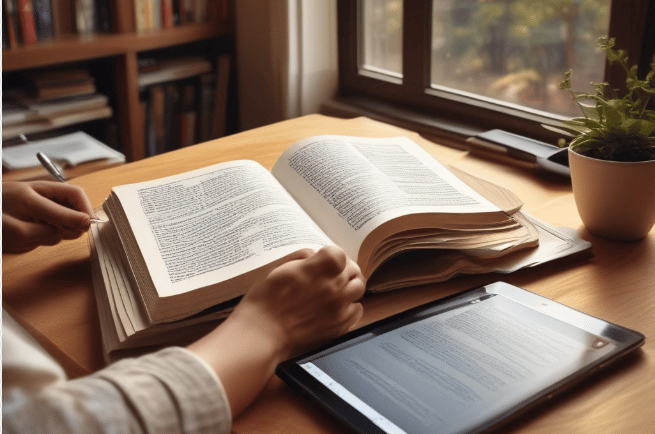
1. The Timeless Charm of Printed Books
There’s something almost magical about holding a physical book. The texture of the paper, the subtle scent of ink, and the act of flipping each page make reading a sensory ritual.
Printed books connect us to a centuries-old tradition. They represent patience, focus, and craftsmanship qualities that are slowly fading in our digital age.
Advantages of Printed Books:
Tangible Experience: You can physically interact with the pages, underline sentences, and feel a deeper connection with the content.
No Distractions: Unlike screens, books don’t come with notifications or digital temptations.
Better Memory Retention: Studies suggest readers remember more from physical books, as page layouts and tactile cues help recall information.
Collectible Value: Bookshelves filled with well-loved titles can feel like a reflection of one’s identity and intellectual journey.
Printed books are especially ideal for deep reading when you want to lose yourself in a story or fully understand complex ideas.
2. The Modern Power of E-Books
While printed books appeal to nostalgia, e-books symbolize evolution. They’ve made reading accessible, portable, and sustainable.
With an e-reader or smartphone, you can carry an entire library in your pocket. Need to look up a definition, highlight a paragraph, or switch between genres instantly? E-books make it effortless.
Advantages of E-Books:
Convenience: Carry thousands of titles on one device perfect for travel, commuting, or busy lifestyles.
Instant Access: Buy or download books instantly from platforms like MetaverseBook.Shop, without waiting for delivery.
Adjustable Reading Experience: Change font size, brightness, and background color for personalized comfort.
Search & Highlight Features: Quickly find quotes or make notes without damaging pages.
Eco-Friendly: No paper, no ink, no shipping a sustainable option for the planet.
For learners, professionals, and on-the-go readers, e-books are not just practical they’re revolutionary.
3. Accessibility: Knowledge Without Barriers
One of the greatest strengths of e-books is accessibility. For readers with visual challenges, adjustable fonts and text-to-speech functions make reading inclusive.
E-books also remove geographical and financial barriers anyone with an internet connection can access learning materials, from classics to academic resources, often at lower prices or even free.
Printed books, while wonderful, can be harder to obtain especially in remote areas or for people who can’t afford multiple purchases.
So when it comes to spreading knowledge to everyone, e-books are the clear winner.
4. Focus and Experience: Digital vs. Physical Immersion
Many readers argue that e-books, while convenient, make reading feel less immersive. Screens can lead to digital fatigue, and constant access to apps or notifications may disrupt concentration.
Printed books, on the other hand, encourage mindful reading a slower, more intentional experience.
However, technology is catching up. With devices now offering paper-like displays, eye comfort modes, and distraction-free apps, e-books are becoming increasingly immersive too.
The difference often lies not in the format but in how you choose to read.
5. Cost and Availability
Here’s where e-books shine.
Physical books involve printing, storage, and shipping costs. E-books skip all that, which is why they’re usually cheaper and faster to obtain.
Moreover, many authors and publishers release exclusive digital editions, allowing readers to explore new content at lower prices.
For readers who love collecting or re-reading, e-books are an economical and space-saving choice.
Still, printed books hold sentimental value they make great gifts, décor items, and personal keepsakes. Sometimes, that emotional worth outweighs the price tag.
6. Environmental Impact: Going Green with Reading
The conversation around sustainability has reached every industry including publishing.
Printing requires paper (trees), ink (chemicals), and transport (fuel). Though many publishers now use recycled materials, printed books still leave a larger carbon footprint.
E-books, on the other hand, are eco-friendly alternatives, especially when reading long-term. The energy used to produce and charge an e-reader is offset after a few dozen books.
So if you care deeply about the environment, e-books are a small but meaningful step toward greener living.
7. Convenience and Portability
If you travel, commute, or have limited space, e-books are unbeatable.
Imagine carrying your favorite titles, work manuals, and novels all in one slim device. You can switch between genres instantly without lugging around multiple books.
Plus, your progress syncs across devices, letting you resume reading wherever you left off.
Printed books, however, encourage presence. You can’t switch tabs or multitask. You’re fully there just you and the story.
For maximum convenience: e-books win.
For deep connection: printed books hold their crown.
8. Emotional Connection and Nostalgia
Here’s the part no technology can replace: the emotional bond of holding a book.
Many readers describe printed books as companions tangible memories of time, place, and emotion. A handwritten note on the inside cover, a coffee stain, or a folded corner carries a sense of life.
E-books, though less tactile, create their own kind of connection. They give you freedom and flexibility to read anywhere, anytime, without limits.
So while one is nostalgic, the other is empowering. Both are emotional, just in different ways.
9. The Future of Reading: A Hybrid World
The future isn’t about choosing between printed and digital it’s about embracing both.
We’re entering a hybrid reading era, where physical and digital coexist beautifully. You might read fiction in print for relaxation but use e-books for learning or travel.
E-books are becoming more interactive, with multimedia elements, real-time annotations, and social reading options. Meanwhile, printed books are turning into collectible art pieces, valued for their design and texture.
The true winner isn’t the medium it’s the reader who enjoys both worlds.
Final Thoughts: Choose What Fits You
So, which is better e-books or printed books? The truth is, both formats serve different moods, goals, and lifestyles.
If you love the feeling of paper and the calm of unplugged reading, printed books will always have your heart.
If you value convenience, portability, and access to a universe of titles in seconds, e-books are your best companion.
What matters most is not how you read, but that you read.
In the end, reading is about connection between you and the story, the author, and your own thoughts. Whether on paper or a screen, that connection remains just as powerful.
So pick your format, open your next book (or e-book from MetaverseBook.Shop), and keep the pages turning in whatever form they come.
Contact
Get in touch
Follow
Connect
+91 8850961942
© 2025 Metaversebooks – A division of JBSD Group.
Metabooks operates under the publishing and digital content business of JBSD Group.
© 2025. All rights reserved.